The Science Behind
Connecting From The Heart
Our goal at Connecting from the Heart is to empower incarcerated and formerly incarcerated individuals to break the cycle of recidivism. Countless peer-reviewed studies show how broken families, the lack of loving support, trauma and more, can produce emotional effects which, in turn, can lead to criminal behavior.
CFTH incorporates trauma-informed therapies, Tapping (Emotional Freedom Technique – EFT) and mindfulness/meditation practices to equip incarcerated individuals with resources to improve their lives. Studies show that improved mental wellness reduces recidivism.
Here are a few studies proving the
efficacy of some of the approaches we use:
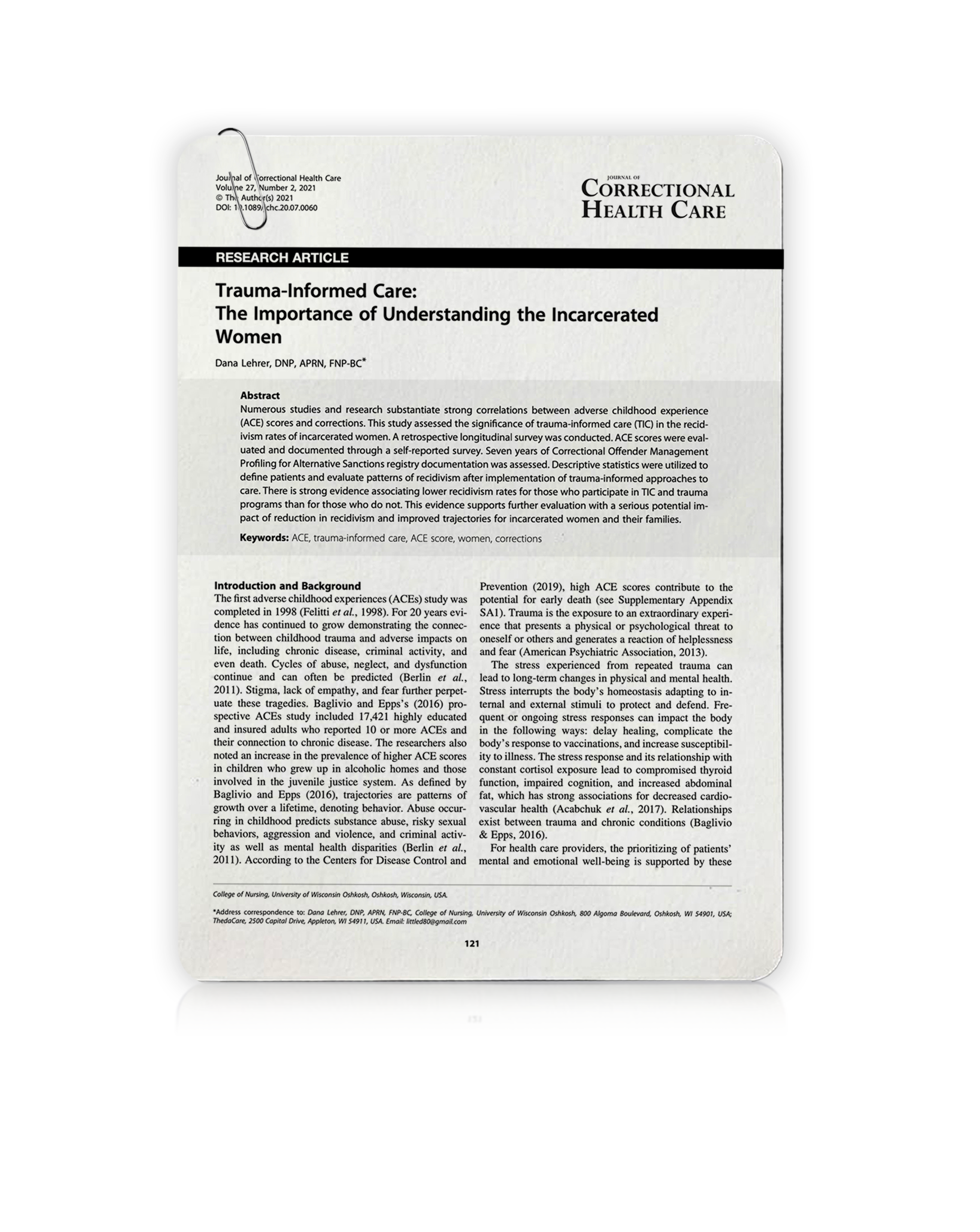
Trauma-Informed Care: The Importance of Understanding the Incarcerated Women
This study assessed the significance of trauma-informed care (TIC) in the recidivism rates of incarcerated women. Descriptive statistics were utilized to define patients and evaluate patterns of recidivism after implementation of trauma-informed approaches to care. There is strong evidence associating lower recidivism rates for those who participate in TIC and trauma programs than for those who do not.
Lehrer, D. (2021). Trauma-informed care: The importance of understanding the incarcerated women. Journal of Correctional Health Care, 27(2), 121–126. https://doi.org/10.1089/ jchc.20.07.0060 Cited by: 36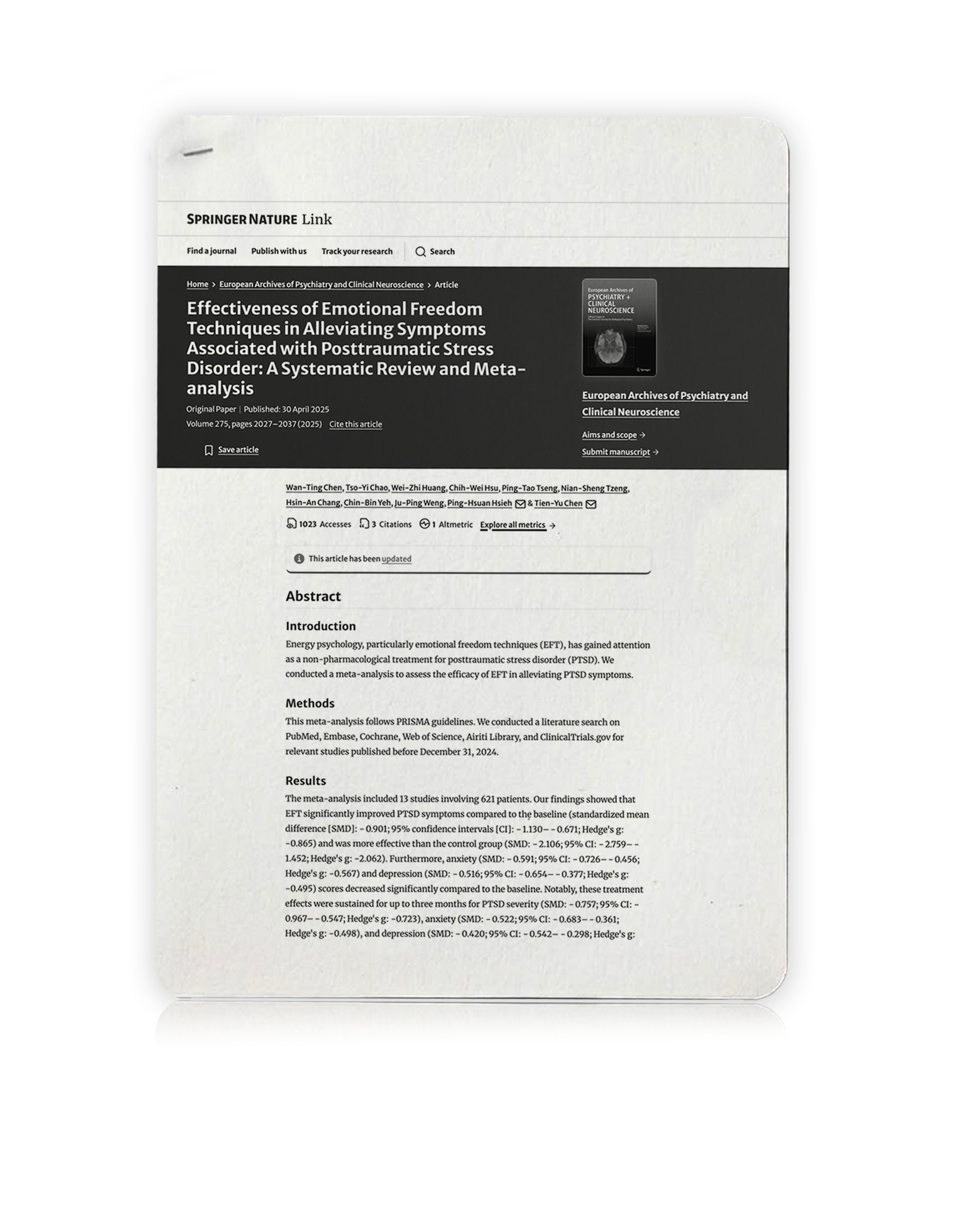
Effectiveness of Emotional Freedom Techniques in Alleviating Symptoms Associated with Posttraumatic Stress Disorder: A Systematic Review and Meta-analysis
Energy psychology, particularly emotional freedom techniques (EFT), has gained attention as a non-pharmacological treatment for posttraumatic stress disorder (PTSD). We conducted a meta-analysis to assess the efficacy of EFT in alleviating PTSD symptoms. Methods This meta-analysis follows PRISMA guidelines. Our findings showed that EFT significantly improved PTSD symptoms compared to the baseline (standardized mean difference [SMD]: − 0.901; 95% confidence
Wanting Chen, et. Al. European Archives of Psychiatry and Clinical Neuroscience 275(7):2027-2037
DOI: 10.1007/s00406-025-02000-4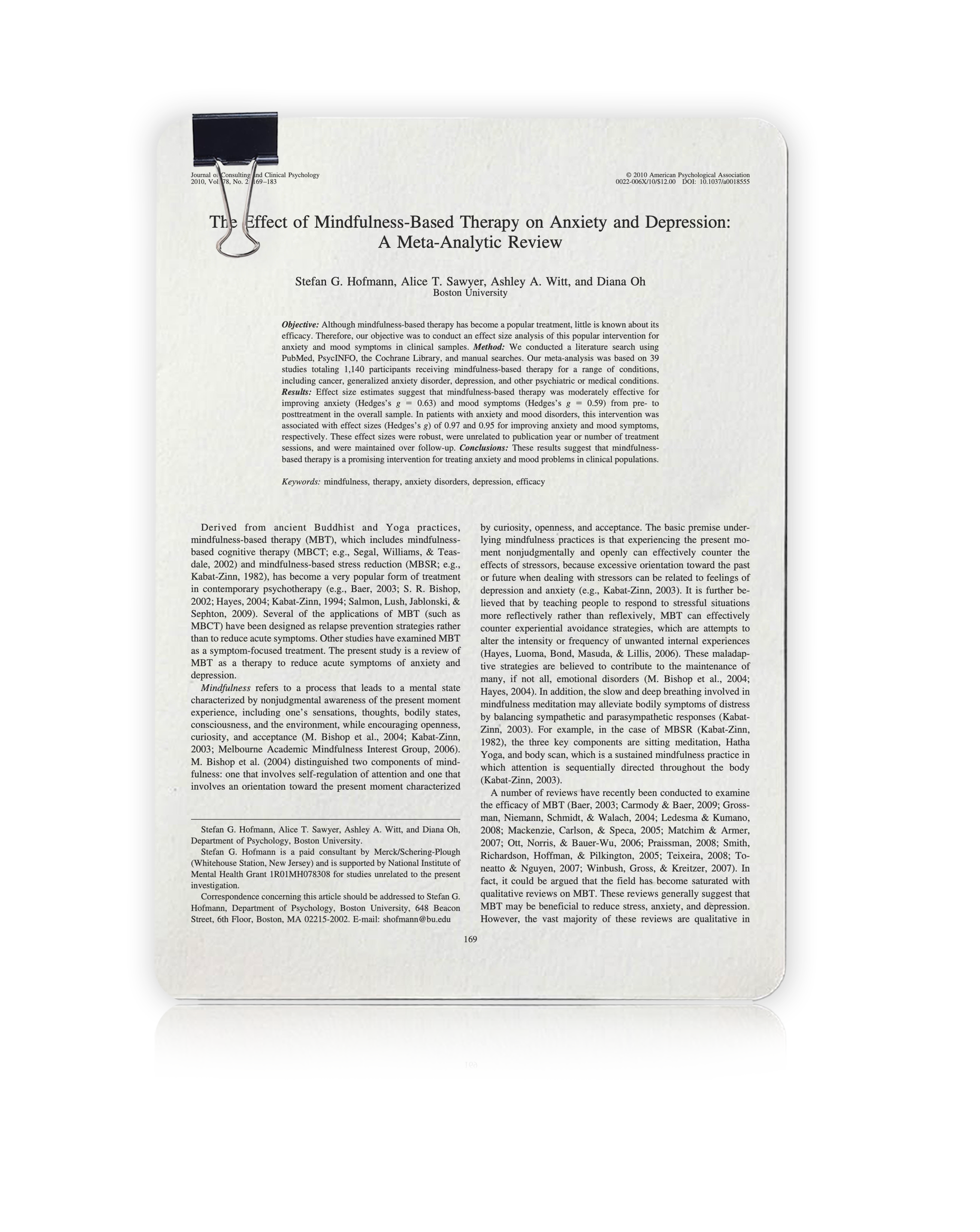
The Effect of Mindfulness-Based Therapy on Anxiety and Depression: A Meta-Analytic Review
This meta-analysis reviews 39 studies totaling 1,140 participants receiving mindfulness- based therapy for a range of conditions. Results indicate effectiveness improving anxiety, stress-related symptoms, and mood, and highly effective for those with diagnosed disorders. These were found to be particularly effective in high-stress populations.
Stefan G Hofmann, et. al.
J Consult Clin Psychology 2010 Apr;78(2):169-83.
doi: 10.1037/a0018555.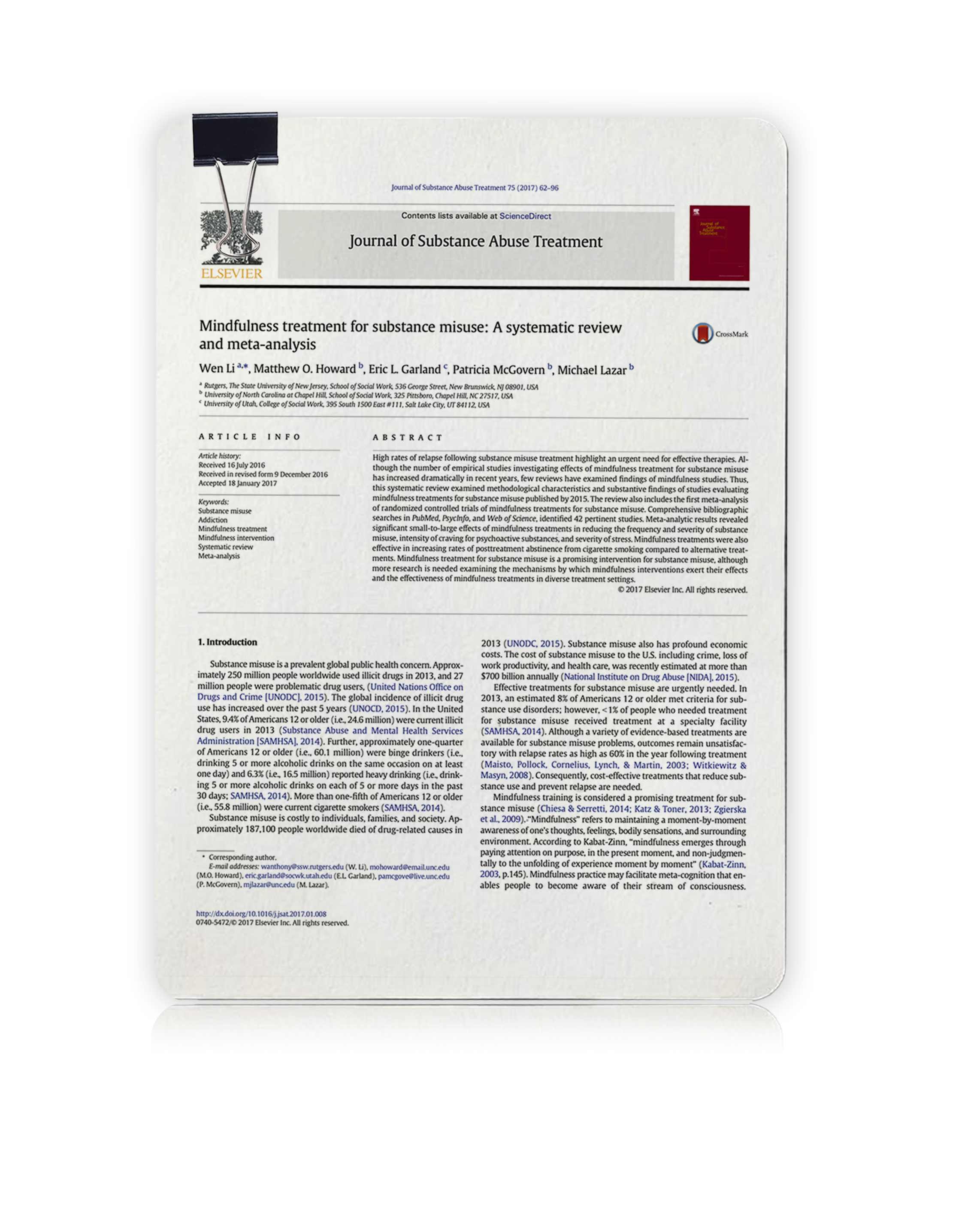
Mindfulness Treatment for substance misuse: A systematic review and meta-analysis
JSAT (Journal of Substance Use and Addiction Treatment) Wen Li, et. al.
A meta-analysis of Mindfulness studies found it to be:
• A positive intervention for substance use disorders
•A significant small effect on reducing substance misuse
•A significant medium effect on reducing craving
• A significant large effect on reducing level of stress